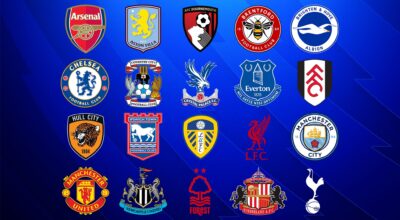
The first in a new series taking a full, structured look at every club to have played in the Premier League — starting with the current 20, beginning with the three promoted last season.
Premier League History
Coventry City were founding members of the Premier League in 1992, one of 22 clubs at the competition’s launch. They went on to spend nine seasons in the competition before relegation in 2001, their highest finish coming twice — 11th, in 1993/94 and again in 1997/98. That relegation ended a remarkable 34 consecutive seasons in England’s top flight, a run that had begun in 1967 and was, at the time it ended, bettered only by Liverpool, Everton, and Arsenal in terms of continuous top-flight tenure. They return for 2026/27 after a 25-year absence, one of the longer gaps any club has bridged back to the competition.
Pre-Premier League Achievements
Coventry’s history goes back to 1883, when the club was founded as Singers FC by workers at the Singer cycle factory, adopting the Coventry City name in 1898 and joining the Football League in 1919. They first reached the old First Division in 1967 under Jimmy Hill, the manager credited with rebranding the club as the “Sky Blues” and introducing an all-sky-blue continental-style kit in 1962 — genuinely innovative for English football at the time, and Coventry are recognised as the first English club to play in matching shirts and shorts of that kind. Their highest-ever league finish came in 1969/70, sixth in the First Division.
Their defining moment arrived in 1987: an FA Cup final win over Tottenham Hotspur, 3-2, widely regarded as one of the best finals of its era and still, to this day, the only major trophy in the club’s history. More recently, they won League One in 2019/20 on their way back up the divisions, before this season’s Championship title — an 11-point margin at the top, achieved while scoring 97 goals in 46 games, at least 15 more than any other club in the division.
City Represented
Coventry sits in the West Midlands, England’s second-most populous conurbation after Greater Manchester, historically built on a manufacturing and engineering base — the bicycle and car industries that gave the club its original name and its “Sky Blues” identity through Singer’s factory heritage. It’s a city with a genuine, sizeable fanbase that stuck with the club through League One, administration, and years of stadium turmoil.
Ownership
Ownership is the single most turbulent part of Coventry’s recent history. For roughly a decade and a half, the club was controlled by hedge fund SISU Capital, an era widely regarded by supporters as disastrous — marked by relegation to League One, administration in 2012/13 with debts of around £30 million (triggering a 10-point deduction), and a genuinely bizarre period where the club was forced to play home matches in Northampton and Birmingham amid a dispute over its own stadium. That era ended in December 2022 and January 2023, when local businessman Doug King, through his company Yelo Enterprises, bought first an 85% stake and then the remaining 15%, taking full ownership and clearing the club’s debts entirely in the process. King has stated all future funding under his ownership would be provided without interest.
Financial Position
Coventry’s finances have been transformed since King’s takeover, moving from a debt-laden, administration-scarred club to one that entered its ownership change explicitly debt-free, with King himself covering any future funding on non-interest-bearing terms. That stability, paired with promotion’s financial windfall, gives Coventry a considerably stronger financial footing heading into this Premier League return than they had during their previous relegation battles in the late 1990s and early 2000s.
Stadium
Coventry left Highfield Road, their home for 106 years, in 2005 for the newly built Ricoh Arena (32,609 capacity), now known as the Coventry Building Society Arena. What followed was one of English football’s stranger stadium sagas: the ground was owned separately from the club, first by a consortium involving Wasps Rugby, who themselves went into administration in 2022, losing the stadium to Mike Ashley’s Frasers Group. Coventry spent years as tenants in their own home city, at one point receiving an eviction notice and having to accept a suspended points penalty after home matches were postponed due to an unplayable pitch. That saga finally resolved in 2025, when Doug King completed the purchase of the CBS Arena itself, reuniting stadium and club ownership for the first time since 2005. There’s no indication of a move away from the ground; the focus now is on finally investing in a stadium the club has only recently come to fully control.
International Appeal
Coventry’s global profile is modest compared to England’s traditional television-era giants — this isn’t a club with an established overseas fanbase or pre-season tour circuit to rival the Premier League’s biggest names. What it does have is a genuinely large and committed domestic following: average home attendances of over 29,000 throughout the promotion-winning 2025/26 season, comfortably among the better-supported Championship clubs, built on decades of loyalty through the club’s toughest years rather than recent success.
Playing Style
Under Frank Lampard, appointed in November 2024, Coventry play a direct, high-energy, attacking brand of football built mainly around a 4-2-3-1, with the flexibility to shift into a back three when the fixture demands it. The promotion-winning side were the Championship’s outright highest scorers by a wide margin, built on high shot volumes, strong underlying expected-goals numbers, and a willingness to attack in numbers rather than sit back on leads. Statistical comparisons have likened their style — high directness combined with a relatively high passes-per-sequence — to Premier League sides like Bournemouth and Brentford, which is a promising sign for how the approach might translate to the step up.
Linked Clubs & Transfer Patterns
Unlike clubs inside a formal multi-club ownership structure, Coventry’s recent transfer business has been built through more conventional scouting and recruitment channels rather than a group-wide pipeline — bringing in players like Haji Wright and Victor Torp who developed under Lampard’s system rather than arriving through a shared ownership network. There’s no significant documented pattern of habitual dealing with one specific club or a shared-ownership relationship at this stage of the club’s history; that may be worth revisiting if King’s ownership expands into any wider footballing interests in the future.
Summary Table
| Metric | Figure |
|---|---|
| Total seasons in Premier League | 10 (1992-2001, 2026-27–present) |
| Premier League titles | 0 |
| Average Premier League finish | ~15th |
| Current consecutive PL seasons | 1 (2026-27) |
| Stadium capacity | 32,609 (Coventry Building Society Arena) |
| Ownership country | England (Doug King, Yelo Enterprises) |
Next in this series: Ipswich Town.