
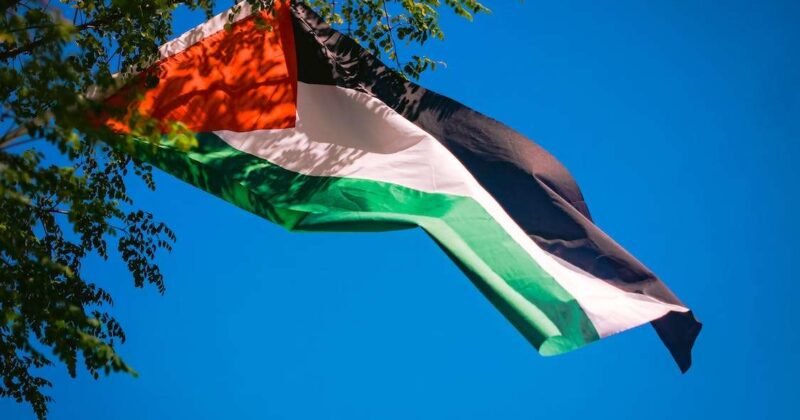
The Gaza ceasefire was signed on 10 October 2025. It’s now been well over ten months. I wanted to know a simple thing before writing anything else: how many of those days has Gaza actually been free of Israeli attack? The honest answer, based on the data actually being tracked, is close to none of them.
The Days That Were Never Actually Peaceful
Gaza’s Government Media Office had documented at least 4,091 ceasefire violations by early August 2026 — over roughly 300 days, that’s an average of more than 13 violations a day, every single day, since the agreement was signed. Over 1,254 Palestinians have been killed and more than 4,121 injured during the “ceasefire” period specifically, not the war that preceded it. The UN’s own Human Rights Office has been blunt about it: High Commissioner Volker Türk said “it is hard to square this with a ceasefire,” after confirming that Palestinians were being killed even when shot far from the Israeli-drawn “yellow line” that’s supposed to mark the boundary of active operations. UNICEF reported that, as of the most recent count, roughly one child has been killed every single day of the nominal truce. The deadliest single day came on 28 October 2025 — 104 people killed in one night, less than three weeks into the ceasefire.
So the answer to my own question is uncomfortable but clear: there has not been a meaningful stretch of days without an Israeli strike on Gaza since this ceasefire was signed. What’s changed is the intensity, not the presence, of the violence.
And Yes, the West Bank Got Worse at the Same Time
You’re right that this is happening to Palestinians too, and the data on this is, if anything, starker than Gaza’s. Settler attacks in the West Bank rose 63% in the first half of 2026 compared to the same period the year before — 660 attacks in six months, up from 405. OCHA now documents an average of six settler attacks a day across the West Bank in 2026. Palestinian deaths from settler violence are on track to set a new annual record, already surpassing the previous worst year (2023) by July. Settler attacks now account for 55% of all Palestinian injuries in the West Bank, a figure that’s climbed from one injury every three days in 2020 to multiple every single day now. At least 107 Palestinian communities have been fully or partially displaced by settler violence since January 2023, and in January 2025 alone, the Israeli military expelled 32,000 refugees from the Jenin, Tulkarem, and Nur Shams camps, effectively emptying them. Human Rights Watch has documented Israeli government ministers publicly calling, in the wake of specific attacks, for Palestinian villages to be destroyed “the same way” Gaza towns were levelled. The International Court of Justice ruled in July 2024 that the occupation itself is unlawful and breaches the prohibition on racial segregation and apartheid — a ruling that predates and has done nothing to slow any of this.
The ceasefire covers Gaza. It was never going to cover the West Bank, because there was never a West Bank ceasefire to begin with — just an acceleration, in plain sight, while the world’s attention sat on Gaza’s nominal truce.
Has Anything Actually Been Rebuilt?
This is where the gap between statement and action is starkest. Gaza needs an estimated $71.4 billion over the next decade to rebuild, according to the joint EU-UN-World Bank damage assessment. The war left an estimated 61 million tonnes of rubble across the strip — over 80% of all buildings damaged or destroyed. As of April 2026, six months into the ceasefire, the UN’s own reconstruction agency had cleared roughly 120,000 tonnes of that rubble. That’s around 0.2% of the total. Trump’s own “Board of Peace” reconstruction plan, publicly announced alongside the ceasefire, was reported in the same month to have stalled, with funding gaps openly acknowledged. One displaced resident of Khan Younis put it plainly to a reporter: “the war is over, but this is the beginning of a new war… of reconstruction.”
And the Aid Hasn’t Even Reached Pre-War Levels
Before October 2023, Gaza received roughly 500 trucks of goods a day — about 7,500 tons, a genuine, if imperfect, baseline for what two million people actually needed. Six months into the ceasefire, in April 2026, Refugees International’s analysis of UN figures found only around 110 trucks a day of genuine UN-coordinated humanitarian aid were entering — Israeli officials cited a higher headline figure of 600-800 trucks daily, but the UN’s own estimate is that less than 20% of that total is humanitarian aid at all; the rest is commercial goods sold at prices most displaced, unemployed Gazans simply cannot afford. So nearly a year into a ceasefire explicitly sold as the moment aid would finally “surge,” the actual flow of humanitarian assistance remains roughly a fifth of what was already, before the war, considered barely adequate — while the underlying need, with 80% of buildings destroyed, most of the population displaced, and a documented famine having taken hold in 2025, is unquestionably far higher than it was before any of this began.
Statements, Not Actions
This is the pattern worth naming plainly. The Board of Peace’s own six-month progress report claimed aid distribution had increased “over 70 percent” and that “basic food needs have been stabilized for the first time since 2023” — a framing Human Rights Watch directly disputed, pointing out that the headline figures omitted that overall aid volumes remained far below both pre-war levels and current need, and that Israeli strikes had killed hundreds of Palestinians in the same reporting period the “stabilization” claim covered. That’s not a disagreement about a rounding error. That’s two completely different pictures of the same six months, one built from progress-report language, the other from body counts and rubble tonnage.
Compare that to how the international community has handled genuinely comparable humanitarian emergencies elsewhere — sustained sanctions regimes, coordinated reconstruction funding actually disbursed on schedule, enforcement mechanisms with real consequences attached. None of that has materialised here at anything close to the scale the documented need demands. What’s materialised instead is a UN spokesperson expressing concern, a Human Rights Council report, an Amnesty briefing, a Board of Peace progress update using softer language than the casualty figures published the same week — a genuinely impressive volume of documentation, condemnation, and formal concern, running in parallel with a death toll that hasn’t meaningfully stopped rising and a rebuilding effort that’s cleared a fraction of one percent of the rubble in ten months.
The world has not failed to notice what’s happening in Gaza and the West Bank. It has produced an extraordinary paper trail proving exactly how closely it’s been watching. What it hasn’t done is act in any way proportionate to what that paper trail actually documents.