
Full disclosure before any of this: I’m not an Apple customer, and I’ve never wanted to be. I’ve always thought of their products as Fisher-Price for adults — beautifully made, but built to remove your choices rather than expand them. But I’ve always given Apple genuine credit for one thing regardless of how I feel about the ecosystem: they used to actually innovate. Capacitive touchscreens, proper multi-touch, the App Store as a genuine platform shift, the iPod’s various identity crises across a decade of shape changes, AirPods getting the cable off mainstream earphones before anyone else made it normal — whatever I think of the walled garden, that hardware history earned real respect.
Yesterday’s September keynote is where I think that era officially ends.
What Was Actually Announced
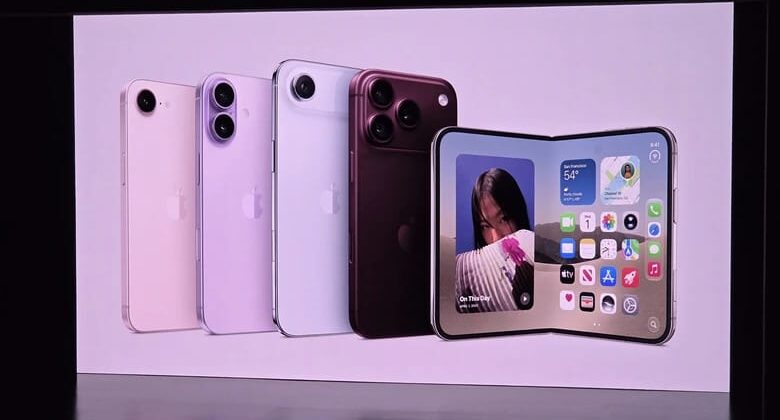
Apple unveiled the iPhone 18 Pro lineup, new AirPods, a new Apple Watch, and — the headline event — the iPhone Duo, Apple’s first foldable phone. This was also new CEO John Ternus’s first major product unveiling since Tim Cook’s fifteen-year tenure came to an end, which makes the event a symbolic changing of the guard as much as a product launch. Prices rose across the board, continuing a pattern Cook himself had flagged back in June, warning that rising component costs — particularly memory and storage, amid the same DRAM shortage this site has covered before — would make increases “unavoidable.” The iPhone Duo itself starts at $1,999 for 256GB, roughly $800 above the entry-level iPhone 18 Pro.
Every year, the keynote language is the same: this is the best iPhone Apple has ever made. Of course it is — no company ever announces its product got worse. What never happens is an honest comparison to what’s actually available outside Apple’s own back catalogue, because most of the audience watching genuinely doesn’t know what’s already out there. That’s not an accident. It’s the entire business model.
Siri AI: A Rebadged Gemini, Presented as a Breakthrough
The keynote’s first big moment was “Siri AI” — a total overhaul of Apple’s long-underwhelming assistant, presented with the fanfare of a genuine leap forward. Strip away the staging, and Siri AI is Google’s Gemini, licensed and skinned. Apple is reportedly paying Google roughly $1 billion a year for the right to run Gemini’s underlying model inside Siri. Android users have had access to this exact lineage — Google Assistant evolving into Gemini — for years already. There was no meaningful acknowledgment of this on stage. It was presented to the room, and to the press coverage that followed, as Apple’s own achievement.
To be fair to Apple for one moment: licensing the best available model rather than stubbornly shipping an inferior in-house one is a reasonable business decision. But it’s a decision that deserves to be described honestly — “we’ve integrated Google’s AI because ours wasn’t competitive” is a very different message from the one the keynote actually delivered.
The iPhone Duo: Apple’s First Fold, Seven Years Late
The second headline moment was the iPhone Duo, Apple’s first foldable — a 7.6-inch inner display, 5.4-inch outer, priced from $1,999, described on stage as having “the largest display ever on an iPhone” and a form factor Ternus said avoids feeling “like two phones awkwardly stuck together,” in a pointed dig at existing foldables. Here’s what taking the Apple-tinted glasses off actually reveals.
The screen comes from Samsung Display — the exact division that’s spent eight generations perfecting Samsung’s own Galaxy Fold line. Samsung Display reportedly developed the crease-reduction layer stack to Apple’s own specifications, meaning the company Apple is implicitly positioning itself against is also the company building the component making the whole device possible. This was not mentioned on stage.
Samsung’s own Galaxy Z Fold 8 beat it to market by weeks, in an almost identical passport-shaped form factor, and by every independently confirmed spec, currently beats the Duo outright: 201 grams against the Duo’s 254 grams, 4.5mm unfolded against the Duo’s 5.2mm, and a starting price around $1,649–$1,899 depending on the market, against the Duo’s $1,999. Samsung didn’t wait quietly for this comparison to be made by tech reviewers, either — it ran a commercial titled “Welcome to Foldable” hours before Apple’s keynote even started, explicitly needling Apple’s seven-year late arrival to a category Samsung has been refining since 2019.
Apple isn’t even the leader on the specific claims it’s making. The genuinely industry-leading crease reduction belongs to Oppo’s Find N6, which achieved a nearly invisible fold line before either Samsung or Apple — reporting on Samsung’s own Fold 8 development explicitly frames Samsung and Apple as “racing for 2nd place” in crease reduction, not first. IP68 dust and water resistance, a first Apple would ordinarily tout loudly, was already achieved on a foldable by Google and Honor before the Duo existed. And the “passport-style” shape itself, novel as Apple’s presentation made it feel, mirrors what Samsung had already shipped with the Fold 8 line weeks earlier, and what Huawei has been iterating on with its own Mate X and Pura foldables for several product cycles already.
What’s Actually Left to Respect
I used to be able to say, whatever my problems with the ecosystem, that Apple built things nobody else had built yet. This keynote doesn’t support that anymore. The headline AI feature is a licensed model built by the company Apple spent over a decade positioning itself as smarter than. The headline hardware feature runs on a screen supplied by the rival it’s implicitly mocking, in a shape that rival had already shipped weeks earlier, at a lower weight and a lower price, while genuinely class-leading specifics — the actual best crease reduction, the actual first IP68 foldable — belong to companies that didn’t get a mention on stage at all.
None of this means the iPhone Duo will fail commercially — Apple’s ecosystem lock-in and brand loyalty are real, durable business assets regardless of what’s happening under the hood, and plenty of buyers will never once compare it to a Fold 8 spec sheet before buying one anyway. But “innovative” isn’t the word for what happened on that stage. Apple has reached the point where its two biggest headline features this year are, respectively, someone else’s AI model and someone else’s screen technology, presented with the same confident framing it once reserved for things it had actually built first. I still don’t like Apple products. What’s changed is that I no longer have to pretend the hardware gives me a reason to.