Football finally has a real regulator. The Football Governance Act 2025 came into force in July that year, creating the Independent Football Regulator (IFR) — a statutory body with genuine legal teeth, replacing the Premier League’s old, famously toothless “Owners’ and Directors’ Test.” The new Owners, Directors, and Senior Executives regime, phased in through 2025 and 2026, requires prospective owners to pass a proper fitness and propriety assessment, including source-of-wealth due diligence and screening for Politically Exposed Persons (PEPs) — people holding, or closely connected to, significant public office, who carry an internationally recognised elevated risk of corruption or improper influence.
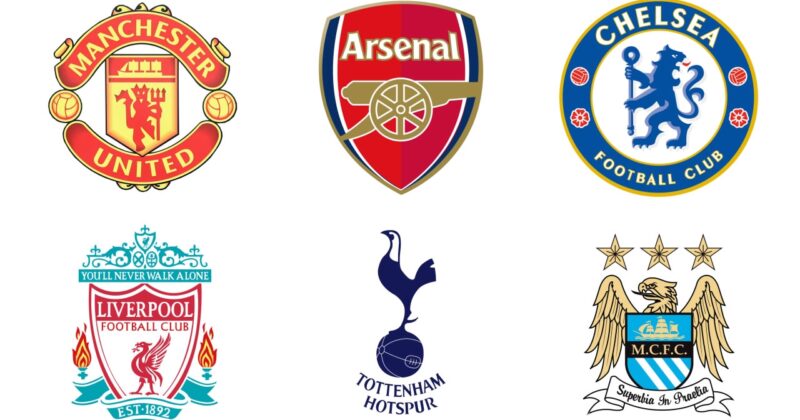
That’s a genuinely different, much stricter bar than English football has ever applied before. So it’s worth asking properly: if each of the Big Six’s current ownership groups were attempting their original takeover today, under these rules, would they get through?
Manchester United: The Clearest Fail on Financial Sustainability
The Glazer family’s 2005 takeover was a textbook leveraged buyout: they borrowed the majority of the £790 million purchase price and secured that debt directly against Manchester United’s own assets, transforming a football club that had been debt-free since 1931 into one carrying interest payments of over £60 million a year from day one. Twenty years later, that debt has never gone away — it hit over £1 billion in net terms for the first time in 2025, the highest level since the takeover, even after Sir Jim Ratcliffe’s INEOS group bought a minority stake specifically to drive financial reform.
Under the new regime’s explicit focus on long-term financial sustainability, this is the clearest test case in the entire Big Six. A buyer proposing today to finance a Premier League acquisition primarily through debt secured against the club itself, with no credible plan to ever actually clear that debt, sits directly against what the IFR’s licensing conditions are designed to catch. This wouldn’t necessarily have failed a source-of-wealth or PEP check — the Glazers aren’t politically exposed persons — but the financial sustainability test is precisely engineered to catch exactly this structure. On that specific measure, this is the takeover in the group most obviously incompatible with the new rules.
Manchester City: A Genuinely Complicated PEP Question
Sheikh Mansour’s 2008 takeover, through the Abu Dhabi United Group, has delivered City more trophies since than in the previous 114 years of the club’s existence combined, backed by well over £1.5 billion in investment. But Sheikh Mansour is Deputy Prime Minister of the UAE and holds the position of Minister of Presidential Affairs — about as textbook a definition of a Politically Exposed Person as exists in world football ownership. ADUG is structured as a nominally private investment vehicle, but researchers and human rights organisations have long argued the ownership functions as a form of state-linked “sportswashing,” with senior City executives themselves having drawn direct public comparisons between the club’s values and those of the Abu Dhabi state.
This is the case that genuinely complicates a simple pass/fail verdict. PEP status isn’t an automatic disqualification under the new regime — it triggers enhanced scrutiny, not a ban — but it does mean a takeover structured this way would face a materially harder, slower, and more heavily scrutinised path today than it did in 2008, when the old test barely looked past unspent criminal convictions. Given the club’s own well-documented 115-charge Premier League financial rules case (still unresolved as of the most recent seasons), it’s a reasonable conclusion that Manchester City’s ownership would face genuine, serious questions under today’s framework that simply didn’t exist when the deal was struck.
Chelsea: A Case That’s Already Been Tested for Real
Chelsea offers something none of the others do: a real, live example of exactly this scenario actually happening. Roman Abramovich’s 2003 takeover raised few questions at the time. Nineteen years later, in 2022, the UK government sanctioned Abramovich following Russia’s invasion of Ukraine, forcing an emergency sale to the Boehly-Clearlake consortium under strict government oversight. That’s the sharpest possible illustration of why source-of-wealth and PEP-adjacent screening now exists: an owner whose fortune and political proximity were waved through under the old regime became a forced-sale emergency under genuine geopolitical pressure less than two decades later. Under today’s rules, an oligarch with Abramovich’s specific ties to the Russian state at the time of purchase would face exactly the kind of enhanced due diligence this new framework was built to apply from the outset, rather than only after a war made the question unavoidable.
Liverpool: A Cautionary Tale That Already Corrected Itself
Liverpool’s current ownership under Fenway Sports Group, since 2010, would very likely clear today’s rules comfortably — FSG is a conventional, transparent American sports investment group with a diversified portfolio. The more interesting case is what came immediately before: Tom Hicks and George Gillett’s 2007 takeover, structured through significant leveraged debt in a strikingly similar pattern to the Glazers’ United purchase, which pushed Liverpool to the brink of administration by 2010 before FSG’s rescue takeover. That ownership, had it persisted, would likely have run into precisely the same financial sustainability concerns as Manchester United’s — proof this isn’t a hypothetical risk limited to one club, but a pattern the 2007-2008 era of English football ownership genuinely produced more than once.
Arsenal and Tottenham: The Comparatively Clean Cases
Arsenal’s ownership, built gradually by Stan Kroenke from a minority stake into full control by 2018, and Tottenham’s ENIC takeover under Daniel Levy in 2001, both involved considerably more conventional financing structures — personal and corporate wealth rather than leveraged debt secured against the club, and no PEP status attached to either principal owner. Neither is entirely without its own critics — Kroenke’s ownership has faced real supporter frustration over the years, and ENIC’s structure has drawn scrutiny for its offshore elements — but on the two specific tests this piece has focused on, financial sustainability and political exposure, both would likely clear today’s bar with considerably less difficulty than United, City, or Chelsea’s original buyer.
The Honest Verdict
Manchester United is the case the evidence most clearly supports as a failure: a takeover explicitly designed to finance itself through club-secured debt, with no organic sustainability built in from day one, is precisely what today’s licensing regime exists to prevent, and twenty years of continuously compounding debt is a hard record to argue around. Manchester City’s case is more genuinely contested — not a clear failure, but a case that would face real, serious modern scrutiny it never received in 2008, purely because “politically exposed person” wasn’t yet a formal category English football bothered screening for. Chelsea’s history proves the entire exercise isn’t academic: the exact kind of owner today’s rules are designed to flag in advance became, in Abramovich’s case, an emergency the game had to handle after the fact instead. Liverpool’s near-miss with Hicks and Gillett shows United wasn’t even a one-off. Arsenal and Tottenham, by comparison, look like the two members of the Big Six least likely to have anything to worry about, had this regulator existed twenty years ago.