Two wars have dominated headlines for years now, treated in most Western coverage as separate stories: Russia’s invasion of Ukraine, grinding on since February 2022, and the US-Israeli war against Iran, which erupted after a joint bombing campaign killed Iran’s supreme leader on 28 February 2026. For most of this year, these have been reported as parallel conflicts. As of this week, that separation no longer holds up. They are merging into one interconnected war, with more countries being pulled in by the day.
Two Wars, One Battlefield
Start with what’s just happened. On 25 July, Ukraine’s security service struck an Iranian vessel transporting military cargo in the Caspian Sea — a ship, according to Israeli media, carrying Iranian weapons bound for Russia. Iran’s foreign minister accused Ukraine of acting “at Israel’s behest” and vowed retaliation, warning that Iranian ballistic missiles put “all Ukrainian territory” within reach. President Zelensky, separately, has publicly accused Russia of passing satellite imagery of US and Gulf military bases to Iran throughout the war, to help Tehran target American positions — surveillance he says covered airbases in Bahrain, Jordan, and Kuwait as recently as 19-20 July. Ukraine has genuine standing to be involved at all: Iran supplied Russia with the Shahed drones now fired by the thousands at Ukrainian cities, and Kyiv says it has shot down more than 44,000 of them since 2022.
That’s the mechanism by which two “separate” wars have become one theatre. Iran arms Russia against Ukraine. Russia allegedly feeds Iran intelligence against the US and Israel. Ukraine strikes Iranian assets directly, in a sea thousands of miles from its own front line. Each side’s enemy’s ally becomes, functionally, its own enemy too.
The Circle of Participants Keeps Widening
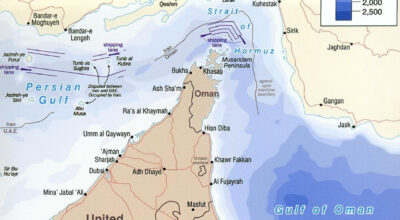
The Iran war itself has expanded well past a US-Israel-Iran triangle. Since the Strait of Hormuz crisis began on 28 February, Iran has closed or contested one of the world’s most critical oil chokepoints, sunk a tugboat, damaged at least seventeen merchant ships, and killed a dozen seafarers. The United States responded with a naval blockade of Iranian ports from mid-April. Yemen’s Houthis, Iran’s regional allies, opened a second front by launching missiles and drones at Israel in late March and disrupting shipping through the Bab el-Mandeb Strait, threatening Saudi Arabia’s alternate export route around Hormuz.
And as of yesterday, 28 July, Saudi Arabia crossed a line it had spent the entire war trying to avoid: for the first time, Riyadh publicly claimed joint responsibility, alongside US Central Command, for airstrikes on Iran-aligned militia sites inside Iraq — retaliation for more than thirty drone attacks on US forces and Saudi energy infrastructure in the preceding three days. Saudi Arabia had been struck repeatedly by Iranian missiles since the war began, and had quietly conducted some strikes of its own, but this was the first time it stepped into direct, acknowledged combat. The Wall Street Journal has separately reported both Saudi Arabia and the UAE “inching toward” a more active combat role for months, with a source describing full entry into the war as “only a matter of time.” Pakistan and China, meanwhile, have taken turns brokering ceasefire attempts between Washington and Tehran, none of which have held for long.
That’s the United States, Israel, Iran, Iraq, Saudi Arabia, the UAE, Yemen’s Houthis, Ukraine, Russia, and — as mediators with their own strategic interests in the outcome — Pakistan and China, all now materially entangled in overlapping fronts of what were originally described as two unconnected regional conflicts.
Yesterday, in Washington
The diplomacy is now happening in the same room, on the same day. On 28 July, President Trump met separately with President Zelensky and Prime Minister Netanyahu at the White House, both leaders in Washington for Senator Lindsey Graham’s funeral. Netanyahu called it “one of the best meetings we’ve had,” describing a shared goal with Trump of preventing Iran acquiring nuclear weapons “whether through diplomatic means or other means.” Zelensky, in his own meeting, discussed licences for Patriot interceptor production and efforts to reinvigorate the stalled diplomatic process to end the war with Russia. Two wars, two leaders, one day, one president trying to manage both simultaneously — a genuinely unusual concentration of global conflict management into a single 24-hour window in Washington.
The Draft Is Already Being Rebuilt, Quietly
If you want a signal that the people actually running these countries take the trajectory seriously, look past the headlines and at the machinery being quietly rebuilt underneath them.
Germany is the clearest case. Having abolished conscription in 2011, Berlin passed a law in December 2025 requiring every German man to register for potential military service at 18, alongside a new voluntary service scheme with recruitment targets rising to 38,000 a year by 2030. If those targets aren’t met, the bill explicitly opens the door to reinstating full compulsory conscription, with senior lawmaker Thomas Röwekamp stating Germany will have to decide by 31 July 2027 at the latest. The plan has already triggered genuine unrest — 45,000 schoolchildren joined walkouts and protests in May 2026 alone, and conscientious objection applications have spiked well beyond anything seen in recent years.
The United States has moved further than most people realise without technically reinstating a draft at all. Tucked into the fiscal year 2026 National Defense Authorization Act, signed into law in December 2025, is a provision ending eighty years of self-registration: from December 2026, the Selective Service System will automatically register every eligible American man aged 18-25 using federal databases, rather than waiting for them to sign up. It stops short of activating actual induction — that still requires separate Congressional authorisation — but it is, by any honest description, the machinery of a draft being pre-built and quietly switched to standby. Asked directly in March whether a draft could return amid the Iran war, White House Press Secretary Karoline Leavitt said Trump “keeps his options on the table.”
The UK is the most reluctant of the three, and for now, the government maintains no plans to bring back conscription. But the debate has moved from unthinkable to mainstream astonishingly fast: former MI6 chief Sir Alex Younger warned publicly that Britain has “largely dismantled” its military and industrial base and is not prepared for war, a coalition of thirteen UK peace and faith organisations launched a petition in May 2026 specifically to head off conscription being introduced by stealth, and unconfirmed reports have circulated of Labour considering extending reservist call-up obligations as far as the over-65s. None of that is policy yet. All of it would have been unthinkable to even discuss five years ago.
Three of the world’s most significant military powers, each independently laying the groundwork to mobilise far more of their own populations than their current volunteer forces provide, all within the same eighteen-month window that’s seen two regional wars merge into one interconnected conflict. Governments don’t quietly rebuild conscription machinery for wars they expect to stay small.
Why Nobody’s Calling It That Yet, and Whether That Matters
Here’s the honest complication in labelling this “World War Three” outright: by the strict historical definition, it isn’t one, at least not yet. There’s no direct combat between the world’s major nuclear powers — the US and Russia are not shooting at each other, nor are the US and China. There’s been no formal declaration of war by any of the major states involved, in an era where wars are rarely declared at all. Huge parts of the globe — most of Latin America, most of Asia beyond the immediate region, all of Oceania — remain entirely unaffected in any direct military sense. Historians studying this will likely reach for a different term: a multi-front proxy entanglement, or a regional war with unusually wide external participation, rather than a third global war in the mould of 1914 or 1939.
But that technical distinction matters less than it used to. Modern great-power conflict was never likely to look like 1939 again — nuclear deterrence alone makes direct superpower-on-superpower combat far less likely than proxy entanglement through smaller allied states, drone supply chains, and intelligence sharing. If you define “world war” not by formal declarations and mass continental mobilisation, but by whether the major global powers are now materially entangled, arming, and striking each other’s allies across multiple interlocking fronts simultaneously — then what’s unfolding right now, this week, fits that shape more closely than anything since 1945. It just doesn’t have the name yet, because the people who’d have to admit that have every reason not to.