I remember exactly where this argument started for me. David Cameron, then Leader of the Opposition, spent years goading Gordon Brown into calling a general election after Brown took over from Tony Blair without one — the accusation being that Brown had no mandate, that he’d inherited the keys to Number 10 rather than earned them. It stuck with me. And what struck me even more, years later, was that when Theresa May took over from David Cameron in exactly the same way — no general election, just a Conservative leadership contest — the opposition barely made the same argument. If they made it at all, nobody was listening.
I was younger then, and I took the “no mandate” argument at face value. Older now, I’ve come round to a different, more uncomfortable conclusion: there was never a mandate to lose in the first place, because we don’t elect Prime Ministers in this country. We never have.
What We Actually Vote For
Here’s the mechanic most people gloss over. A UK general election is 650 separate, local contests. You vote for the person standing to represent your constituency — your MP. That candidate represents a party, and in practice, what they’re really standing on is that party’s manifesto, not their own personal programme. The party that wins the most seats forms a government, and whoever that party has chosen as its leader becomes Prime Minister.
Notice what’s missing from that sentence. At no point does the country, as a whole, get a ballot paper with a Prime Minister’s name on it. You are voting for a local representative and, by extension, a party brand. The leadership is a separate internal matter entirely, decided by each party’s own rules — rules that vary wildly from party to party, and that ordinary voters have no say in whatsoever.
The Evidence Is Right in Front of Us
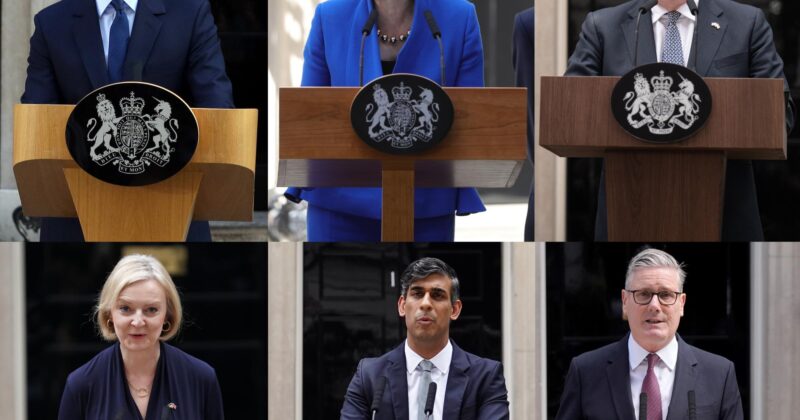
Look at the run of Prime Ministers this country has had without a fresh general election validating the change: Gordon Brown succeeded Tony Blair. Theresa May succeeded David Cameron after the Brexit referendum. Boris Johnson succeeded May. Liz Truss succeeded Johnson. Rishi Sunak succeeded Truss. And now, this coming Monday, Andy Burnham succeeds Keir Starmer — becoming, by most counts, the UK’s seventh Prime Minister in a decade of genuine political turbulence.
Predictably, Reform and the Conservatives are already calling for a general election, arguing Burnham has no mandate. It’s the exact same argument Cameron made against Brown, word for word in spirit. But here’s the flaw in it: Labour does have a mandate. They won the last general election outright. The public handed them a five-year term. The manifesto the country voted for was Labour’s, not Keir Starmer’s personally — and Labour, as a party, is entitled under our system to change its own leader within that mandate exactly as the Conservatives did three times between 2016 and 2022 without anyone seriously threatening to force an election over it.
You can’t have it both ways. Either changing a party leader mid-term always invalidates the mandate, or it never does. The selective outrage only ever seems to appear when it’s politically convenient for whoever’s in opposition at the time.
Nobody Serves a Full Term Anymore
There’s a broader pattern sitting underneath all of this that’s arguably more troubling than the mandate argument itself: this country has not managed to have a Prime Minister win a general election and then see out their full term in office for years. Brown never won one at all. May won a hung parliament and never recovered her authority. Johnson won big in 2019 and was gone within three years, in disgrace. Truss lasted 45 days. Sunak inherited the job and lost the next election he called. Starmer won the biggest majority in a generation and was pushed out inside two years by his own party.
Whatever you think of any of these individuals, that pattern isn’t a sequence of unrelated events. It’s a structural symptom of a system where the person occupying the top job answers first and foremost to their parliamentary party, not to the electorate directly — because the electorate never actually chose them for that specific job in the first place.
Manifestos Are Promises Nobody Delivers
There’s a second layer to this worth being honest about: even the mandate we do give parties rarely translates into what actually happens in government. Manifestos are, more often than not, aspirational documents rather than binding contracts. Governments U-turn, water down, or quietly abandon manifesto commitments constantly, and there’s essentially no mechanism to hold them to it beyond waiting for the next election.
It’s one of the only things I’ll credit Donald Trump for, of all people. Whatever you think of his politics — and I don’t agree with most of them — he has, for the most part, actually done what he said he’d do if elected. That’s rare enough across Western democracies that it stands out as notable, regardless of whether you think the policies themselves are good ones.
A Glorified Talent Contest
Put all of this together and you’re left with an uncomfortable question: what are UK general elections actually selecting for anymore? Not a Prime Minister, directly — the system was never built that way. Increasingly, not even a fixed set of policies you can hold anyone to afterward.
What’s left is personality. The leader who best channels whatever the public mood happens to be in that moment — who comes across as relatable, decisive, likeable on a debate stage or a morning sofa interview — is the one who tends to get their party over the line. That’s not a conspiracy theory, it’s simply what the system rewards when the policy substance behind it is negotiable and the individual at the top isn’t who you actually voted for anyway.
Call it what it is: increasingly, British general elections function less like a referendum on a programme for government, and more like a talent contest for who gets handed the keys to a job the public never directly applied them for.
We don’t elect Prime Ministers in this country. We elect parties, and parties elect whoever they like. Until that changes, expect a lot more Mondays like this one.