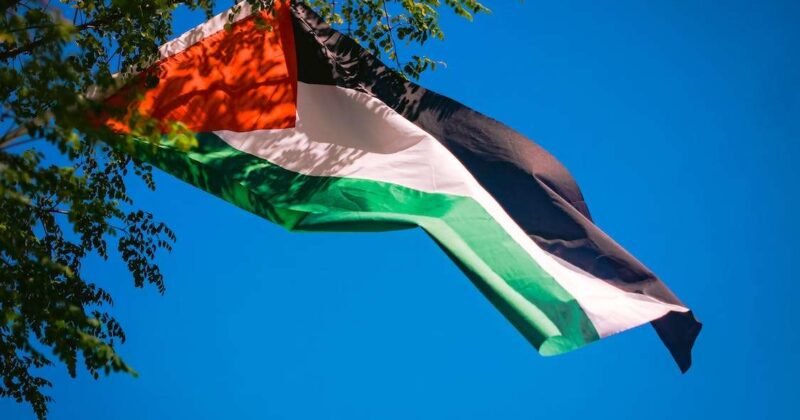
For the last several years, if you’ve followed the news at all, the word “Palestine” has arrived almost exclusively attached to a body count. Gaza bombed. Gaza besieged. The West Bank’s land seized, its residents evicted. Numbers, statistics, death tolls, and — far too often — a lazy, dehumanising shorthand that treats an entire people as a security threat rather than a population of actual human beings living actual lives.
This piece isn’t about the politics. Israel’s actions and the West’s response to them are subjects worth their own honest scrutiny elsewhere, and worth mentioning here at least in passing: the world has, by any fair reading, largely looked away while Palestinian suffering mounted, and that failure deserves its own reckoning. But that’s not what this is. This is about the people themselves — who they are, what they’ve built, and what almost never makes it into the coverage.
A Literacy Rate That Puts Wealthy Nations to Shame
Start with a fact that should genuinely surprise most people: Palestinians have one of the highest literacy rates on Earth. As of 2022, the adult literacy rate across the West Bank and Gaza stood at around 98% — a figure that has, at various points, actually exceeded the average literacy rate for the UNDP’s own “high human development” category of nations, the group that includes many of the world’s wealthiest countries. Youth literacy runs even higher, close to universal. Women’s literacy has climbed from 78.6% in 1995 to over 94% today, a transformation achieved not in a period of stability and investment, but through decades of occupation, blockade, checkpoints, and repeated conflict damaging schools faster than they could be rebuilt. A population living under some of the most restrictive conditions on the planet has still built and sustained one of the most literate societies in the world. That’s not an accident. That’s a people who have decided, collectively, that education is non-negotiable regardless of what else is taken from them.
Hospitality as a Way of Life, Not a Performance
Anyone who has actually spent time in a Palestinian community — in East Jerusalem, in the West Bank, in the diaspora — tends to come away with the same story: total strangers insisting on feeding you before asking your name. Generosity and hospitality sit near the absolute centre of Palestinian cultural identity, not as an abstract value but as a lived, daily practice. Guests are welcomed into family meals as a matter of course. The phrase “sahtein,” wishing double health on anyone sharing a meal, captures the spirit precisely: food is never just nutrition, it’s a social act, an expression of connection. It’s genuinely common to see a family with very little insist on sharing what they have with a visitor rather than saving it for themselves — not as a gesture for show, but because that’s simply what hospitality means to them. That instinct hasn’t diminished under decades of hardship. If anything, it’s held on more tightly, as one of the few things nobody can take away.
A Culture Stitched, Danced, and Cooked Into Every Generation
Palestinian identity carries itself forward through craft and custom in ways that have survived even mass displacement. Tatreez, Palestinian embroidery, is recognised by UNESCO as intangible cultural heritage — intricate, region-specific patterns stitched into the traditional thob dress, with the specific colours and motifs of a piece often identifying exactly which village a woman’s family came from. After the mass displacement of 1948, when over 700,000 Palestinians became refugees, tatreez patterns became one of the few things families could carry with them, quite literally stitching memory and origin into cloth that survived when homes didn’t.
Dabke, the communal line dance performed at weddings and celebrations, channels the same spirit in movement rather than thread — synchronised, rhythmic, and deliberately collective, a dance that’s as much about reinforcing community bonds as it is entertainment. Cuisine carries an equal weight: maqluba, the “upside-down” dish of rice, meat, and vegetables flipped dramatically onto a serving platter; knafeh, the syrup-soaked cheese pastry beloved across the region; olive oil, treated as close to a national treasure, tied to generations of families tending the same terraced groves their grandparents planted. And in literature, Mahmoud Darwish gave Palestinian identity some of its most enduring words — writing, among many other things, that on this land there is “that which makes life worth living,” a line that captures the culture’s defining tension: unmistakable hardship, met with an equally unmistakable refusal to let that hardship be the whole story.
Thriving Isn’t the Same as Comfortable
None of this erases the genuine severity of daily Palestinian life — restricted trade, aid dependency, malnutrition rates and life expectancy figures nowhere close to what stability would allow, movement controlled by checkpoints, whole communities cut off from ordinary economic participation. None of it should be minimised, and it’s precisely why the resilience underneath it means something rather than nothing. A community that has maintained near-universal literacy, sustained a UNESCO-recognised craft tradition across generations of displacement, and still, by every visitor’s account, insists on feeding guests before feeding itself, isn’t a population defined by what’s been done to it. It’s a population that has continued building, teaching, cooking, dancing, and welcoming strangers through conditions that would have broken far less resilient societies entirely.
That’s the story that rarely makes the news. It’s the one worth telling anyway.